
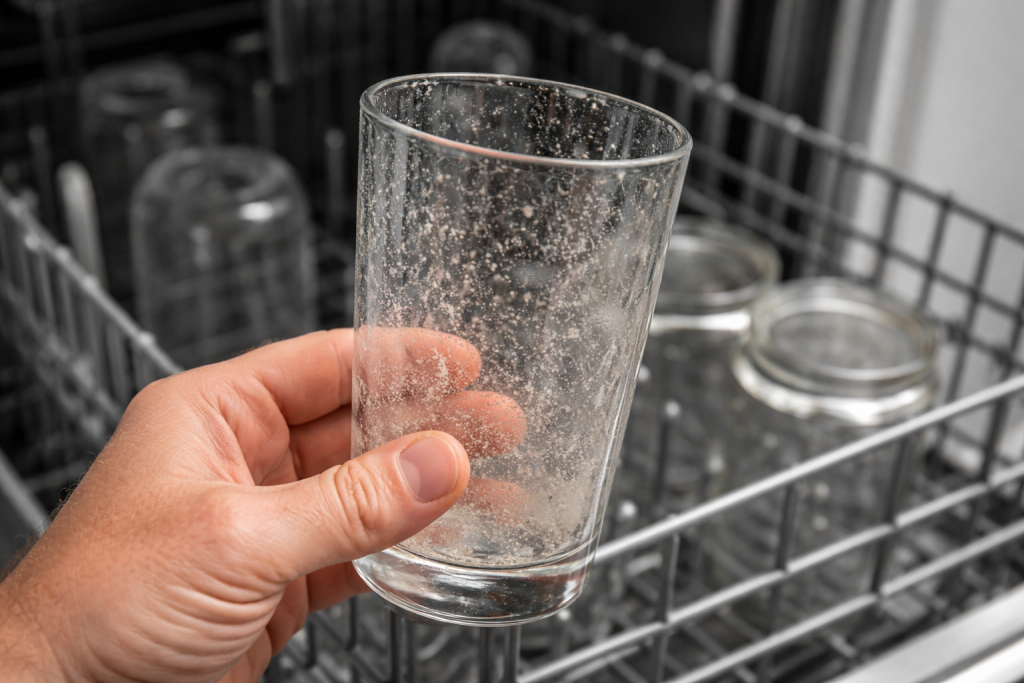
Dishwasher standing water is a frustrating sight, and Quick & Pro Appliance Repair helps San Gabriel Valley homeowners trace it to the real cause. A few spoonfuls of water at the bottom can be normal, but a pool of dirty water after the cycle is not. This guide covers the common blockages, the checks that are safe at home, and the signs that point to a failed pump.
What Dishwasher Standing Water Tells You
Every dishwasher leaves a small amount of water in the sump, the shallow basin under the lower rack. This water keeps seals moist and helps the pump prime. If you see more than a thin film, the machine has not drained properly.
The pattern matters. Water that appears after every cycle suggests a blockage or a failed part. Water that appears only sometimes points to a clog that shifts around, or to a sink drain that is backing up.
Also notice the smell and colour. Grey, cloudy water with a foul odour often means food debris is trapped. Clear water with no smell may mean the pump is simply not running. Both clues help narrow the search.
How a Dishwasher Drains
Understanding the drain path makes diagnosis faster. At the end of the wash, the drain pump pushes water out of the sump. The water travels through a hose, usually past a check valve, and joins the sink drain or garbage disposal.
A filter at the bottom of the tub traps food before it reaches the pump. If that filter clogs, water drains slowly or not at all. A kinked hose, a stuck check valve or a blocked disposal inlet can create the same symptom.
Control problems are less common. A faulty control board or a failed drain solenoid may stop the pump from starting. Those faults need testing with proper tools.
Simple Checks That Often Solve It
Begin with the easiest steps. Switch off the power at the breaker or unplug the machine first, because you will be working near water and electrical parts.
- Remove the bottom rack and look for broken glass, bones or labels near the drain.
- Take out the filter, rinse it under warm water and scrub gently with a soft brush.
- Scoop out standing water with a cup and wipe the sump clean.
- Run the garbage disposal if the dishwasher drains through it.
- Check that the knockout plug inside a new disposal was removed.
A blocked disposal is surprisingly common. If the sink drain is slow too, the problem may be in the household pipe rather than the dishwasher. In that case a plumber is the right call.
Symptom, Likely Cause and What We Do
Match your symptom with this table to see where the fault may sit.
| Symptom | Likely cause | What a technician does |
|---|---|---|
| Standing water after every cycle | Clogged filter or drain | Cleans the filter and clears the path |
| Pump hums but no draining | Jammed impeller or blocked pump | Inspects and clears or replaces the pump |
| No sound at drain stage | Failed pump motor or control fault | Tests the pump and the board |
| Water in sink bubbles up | Blocked disposal or household drain | Checks the disposal and air gap |
| Water returns after draining | Failed check valve | Replaces the valve |
| Drain hose looks flattened | Kinked or collapsed hose | Reroutes or replaces the hose |
If more than one row fits, begin with the filter and move to the hose. That order saves time and avoids unnecessary part changes.
The Drain Hose, Air Gap and Disposal
The drain hose should rise in a high loop under the sink before it reaches the drain. This loop stops dirty sink water from flowing back into the tub. If the loop is missing or the hose is kinked, water can return to the dishwasher.
Some homes use an air gap on the sink deck. It looks like a small cylinder next to the faucet. When it clogs with debris, water backs up. Remove the cap and clean out the gunk with a small brush.
Disposal connections need care too. If the dishwasher hose connects to the disposal, any clog in the disposal will block the dishwasher. Clearing the disposal first often fixes the issue.
When Dishwasher Standing Water Means a Pump Problem
If the filter, hose and disposal are clear, the drain pump becomes the main suspect. A pump can fail because of a worn motor, a jammed impeller or a broken seal. You may hear a hum without any water moving, or no sound at all during the drain stage.
As an industry estimate, many drain pumps last somewhere between eight and twelve years, although hard water and heavy use can shorten that range. Small bits of glass in the sump are a frequent cause of early wear.
Pump replacement is a repair for a trained technician. Water, wiring and sharp debris share the same tight space. Our dishwasher repair service tests the pump, valve and control board before replacing any part.
Related Problems to Rule Out
Standing water often travels with other dishwasher symptoms. A machine that leaves water behind may also leave dishes wet, which our guide on dishes that will not dry properly explains.
Stale water also breeds odours. If the tub smells musty after the water is gone, read about a dishwasher that smells like mildew for cleaning steps.
Grit on glassware is another clue. Poor drainage leaves food particles in the tub, and they settle on dishes during the final rinse.
When you call, tell the technician what you already tried. Mention whether the filter was clean, whether the disposal ran, and when the water first appeared. Those details can save time during the visit and help the technician bring the right parts.
Prevention Tips
Scrape large food pieces from plates, but skip heavy pre-rinsing. Clean the filter every month or two, and run the disposal before each cycle. Use a monthly cleaning cycle with a suitable dishwasher cleaner to dissolve grease.
The ENERGY STAR dishwasher page offers guidance on efficient loading and operation. Loading dishes correctly keeps spray arms moving and prevents debris from piling up in the sump.
Frequently Asked Questions
Is a little water at the bottom of my dishwasher normal?
Yes. A thin film in the sump is normal and helps keep the seals moist. A visible pool after the cycle is not normal and needs attention.
Can I run the dishwasher again with standing water?
It is best not to. Repeated cycles can spread dirty water and overload the sump. Clean the filter and check the drain first.
Does vinegar fix a drain problem?
Vinegar can help with light buildup, but it will not clear a blockage or repair a failed pump. Remove debris by hand and check the hose for the true cause.
When should I stop and call a technician?
Call when the filter, hose and disposal are clear but water remains. You should also call if you hear humming with no draining, or see leaks near electrical parts.
Contact Quick & Pro Appliance Repair
If water still sits in your dishwasher, call us at (818) 860-8028. Our hours are Monday to Sunday, 7am to 9pm. You can also write to us through the contact page, and we give an honest quote after assessing the machine.