
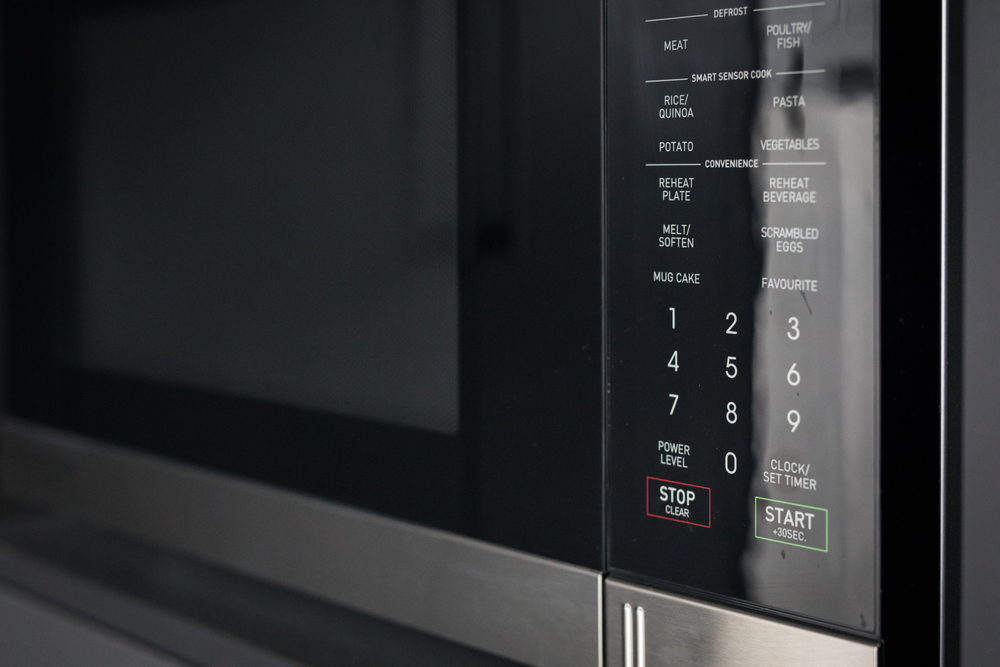
Microwave sparking is a serious warning, and Quick & Pro Appliance Repair advises San Gabriel Valley households to stop using the oven the moment it happens. Sparks, flashes or a crackling sound can come from something as simple as a metal rack, or from a damaged internal part. This guide explains the common causes, what you can check safely, and when a technician must take over.
What Microwave Sparking Really Means
A microwave heats food by sending energy waves into the cavity. Metal reflects those waves, and they can arc as bright sparks. That is why a small piece of foil or a gold-rimmed plate can trigger fireworks in seconds.
Not every spark means a failed oven. In many homes the first sign is a faint crackle that fades when the item is removed, which is a useful clue for sorting simple causes from repairs. Sometimes the culprit is the food or the dish. Other times the oven itself has a damaged part, and that is more urgent because the fault will return with every use.
The most important rule is simple. Stop the oven, unplug it and let it cool before you investigate. Never keep running a machine that is flashing, because arcing can burn parts and create a fire risk.
Everyday Causes You Can Remove
Start with the contents. These common items cause sparks in many kitchens:
- Metal utensils, foil edges, twist ties and takeout containers with metal handles
- Dishes with gold or silver trim
- Dense, mineral-rich foods such as spinach, carrots and some other vegetables placed without a cover
- Grapes cut almost in half, which can create an arc between the two halves
- Dried food or grease splatter that has built up on the walls
Remove the item and wipe the cavity with a damp cloth. Check the turntable and its ring, because food spills can hide there. Then run the oven for a few seconds with a cup of water inside. If no sparking returns, the cause was probably the item.
Damaged Parts That Cause Arcing
If sparks appear in an empty oven or with a cup of water, an internal part is likely damaged. Never run a microwave empty to test it, because that can destroy the magnetron.
The waveguide cover is a common culprit. This small panel, often mica, sits on the inner wall and protects the waveguide from food. When grease soaks into it, it can burn and spark. A cracked or scorched cover needs replacement.
Other causes include chipped interior paint that exposes bare metal, a damaged turntable support, a worn door seal, or a failing diode or capacitor. Those electrical parts hold a dangerous charge even when the oven is unplugged.
Symptom, Likely Cause and What We Do
Use this table to compare what you see with likely causes.
| Symptom | Likely cause | What a technician does |
|---|---|---|
| Sparks with metal in cavity | Foil, utensil or trimmed dish | Advises on safe cookware |
| Sparks with a cup of water | Damaged waveguide cover | Inspects and replaces the cover |
| Sparks near the walls | Chipped paint or exposed metal | Assesses the cavity and repairs |
| Burnt smell, no heating | Failed diode or magnetron | Tests the high-voltage parts |
| Buzzing and flashing | Arcing across a worn part | Locates the damaged component |
| Door does not seal | Worn latch or seal | Replaces the seal and checks safety |
If you see a scorch mark inside, take note of its location. That detail helps the technician find the damaged part faster.
Safety Steps Before You Do Anything Else
Microwaves store electrical energy in a high-voltage capacitor. That charge can remain after the plug is pulled, and it can injure anyone who opens the casing. For this reason, do not remove the outer cover yourself.
Follow these safe steps instead:
1. Press stop and open the door.
2. Unplug the oven or switch off its breaker.
3. Let the oven cool for at least ten minutes.
4. Remove food, plates and the turntable.
5. Wipe the cavity and look for burn marks or paint damage.
For general product safety guidance, the Consumer Product Safety Commission publishes consumer safety guides. If you see flames, unplug the oven only if you can do so safely, keep the door closed and call emergency services.
When Microwave Sparking Signals a Repair
Call a professional if the sparking returns after you remove the cause. Also call if you see burn marks, smell burning plastic, or notice the oven no longer heats. These signs often point to a damaged waveguide cover, a failing magnetron or a worn diode.
Repair is often possible, but not always the right choice. A technician can assess the damage and tell you honestly whether repairing it makes sense. For built-in or high-end units the answer often differs from a basic countertop model. We weigh age, condition and the extent of the damage, and you can learn more about our company before you book.
You can read about the full range of work we handle on our appliance repair homepage, which lists microwave service alongside our other repairs.
Habits That Prevent Sparks
Prevention is simple. Use microwave-safe glass or ceramic dishes, cover food loosely, and keep the cavity clean. Wipe spills right away, because baked-on grease absorbs energy and burns. A quick wipe after each use takes less than a minute and removes the residue before it hardens.
It also helps to know your oven’s wattage and the power levels it offers. Lower power settings heat food gently and reduce hot spots. Hot spots stress thin food and can create the exact conditions where arcing starts, especially with dry or dense items.
Check the waveguide cover monthly. Look for brown patches or cracks. Also inspect the door seal and latch, since gaps allow energy leakage and wear. If you notice a worn turntable ring, replace it, because a wobbling plate can bump the walls.
Never place metal bowls, travel mugs or foil-lined bags inside. When a recipe calls for foil shielding, follow the manufacturer’s instructions exactly, because many ovens forbid it.
Keep a short note of what you saw. Mention where the sparks appeared, what was inside the oven, and whether a burning smell followed. Those details help the technician decide which part to test first, and they shorten the visit.
Frequently Asked Questions
Is a little sparking harmless?
No. Even brief arcing can burn the waveguide cover, scorch the walls or damage the magnetron. Stop the oven and find the cause before you use it again.
Why do grapes spark in the microwave?
Two grape halves joined by a thin strip of skin can act like an antenna and arc. This is a known effect, and it can scorch the cavity, so do not try it at home.
Can I replace the waveguide cover myself?
The cover itself is a small part, but access often requires removing the outer case. That exposes the high-voltage capacitor, so we recommend a technician handle it.
Should I keep a microwave that sparks every time?
Not until it is inspected. Repeated sparking means something is damaged. A technician can tell you whether the unit can be repaired safely.
Contact Quick & Pro Appliance Repair
If your microwave keeps sparking, call us at (818) 860-8028. Our hours are Monday to Sunday, 7am to 9pm. You can also use the contact page to describe the problem, and we give an honest quote after assessing the oven.