
When a washer won’t drain, it usually feels urgent because the tub stays full and laundry time stops fast. Therefore, this guide breaks down what we check at Quick & Pro Appliance Repair when customers report standing water after a cycle.
A full tub can come from a simple clog, a kinked drain hose, or a pump issue that needs parts and testing. In other words, the goal is to identify the safest “easy wins” first, then move to the more technical causes without making a bigger mess.
Washer won’t drain: what it means right now
If the tub is full, the washer is protecting itself from overflowing or spinning with water inside. Consequently, many models will pause, beep, or end the cycle early because they cannot reach the drain stage.
Before doing anything, turn the washer off and avoid forcing more cycles. After that, grab towels and a shallow pan, because even basic checks can release trapped water. If you want a clearer view of how our team approaches these situations, you can also review our background on the About Quick & Pro Appliance Repair page.
First checks that solve many full tub problems
Confirm the drain hose is not blocked or installed too deep
Start behind the washer and look for crushed spots, tight bends, or a hose pushed too far down into the standpipe. Therefore, water may not flow out if the hose is kinked, pinched, or creating a siphon condition.
Also check the standpipe height and make sure the hose has an air gap. In other words, if the hose seals tightly inside the pipe, the washer can struggle to drain or may pull water back in. If you fix a kink and the washer drains normally, run a quick rinse and spin to confirm the tub empties fully.
Look for a clogged filter or pump trap
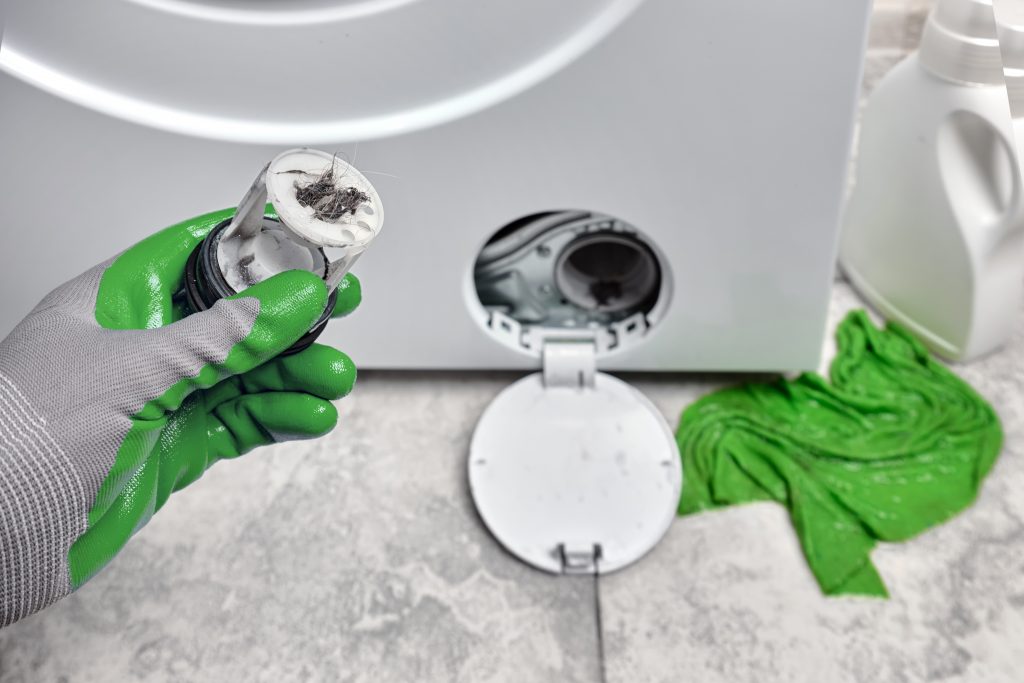
Many front loaders and some top loaders have a small access panel where a pump filter sits. Consequently, coins, hair pins, socks, and lint can block the pump and stop draining.
Turn off power, place towels, and open the filter slowly so the water releases in a controlled way. After that, remove debris, rinse the filter, and check for small items stuck in the housing. If the tub empties after this, you likely found the cause.
The most common mechanical causes we see
Drain pump failure or jam
A drain pump can fail electrically, or it can jam when something small gets into the impeller. Therefore, you might hear a humming sound with no water movement, or you may hear nothing at all during the drain portion.
If the pump hums but does not move water, debris is a strong suspect. In other words, clearing the trap may help, but a damaged impeller or worn motor can still require replacement. For persistent issues, our washer repair service focuses on diagnosing the pump circuit, checking the impeller, and confirming proper drain flow under load.
Lid switch or door lock not confirming “safe to spin”
Some washers will not complete a drain and spin if the lid switch or door lock signal is inconsistent. Consequently, the machine may drain a little, pause, and leave water behind, especially if it “thinks” the door is not locked.
This is not always obvious because the door can look closed. Therefore, we test the lock and the control’s feedback signal rather than guessing, since replacing the wrong part wastes time and money.
Pressure switch or water level sensing issues
The washer uses a sensor to “know” the tub level, and if it reads incorrectly, the control can behave oddly. In other words, it may keep trying to drain, stop too early, or refuse to spin because it believes water is still too high.
A blocked pressure hose, residue buildup, or sensor failure can cause this. Therefore, proper testing matters here because symptoms can look similar to a pump problem.
Drain system clogs that aren’t inside the washer
Sometimes the washer is fine, but the home drain is slow or backing up. Consequently, the tub stays full because the water has nowhere to go.
If you notice gurgling in nearby drains, water rising in the standpipe, or slow draining in a laundry sink, the household plumbing may be the root cause. After that, it helps to stop running the washer until the drain line is cleared, because repeat backups can damage floors and walls.
What to avoid when the washer won’t drain
Avoid forcing repeated drain cycles because overheating a struggling pump can turn a small clog into a part failure. Therefore, do not tilt the machine aggressively or remove random hoses unless you are prepared for a lot of water.
Also avoid using harsh drain chemicals inside the washer. In other words, those products can damage seals and hoses and still not fix a sock stuck in the pump path.
When to call Quick & Pro Appliance Repair
If you cleared the hose path and filter area and the tub still stays full, the next steps usually require electrical checks and safe disassembly. Consequently, this is where a professional visit saves time, protects your washer, and reduces the chance of water damage.
We also help households dealing with multiple appliance issues, because drain and water problems can overlap with other machines. For example, if you are having kitchen drainage symptoms too, our dishwasher repair team can check for related flow and clog patterns, and if laundry timing is disrupted by heat or airflow issues, our dryer repair service can keep the whole routine on track. Likewise, if you are troubleshooting cooking appliances at the same time, our stove repair support can help you organize repairs without guesswork.
FAQs
Why is my washer full of water after the cycle ends?
Most importantly, it usually points to a blocked drain path, a clogged pump filter, or a drain pump issue. Therefore, check the drain hose for kinks and inspect the pump trap if your model has one.
Can I drain the tub myself before a repair visit?
Yes, in many cases you can drain carefully using the pump filter access or by lowering the drain hose into a shallow pan. Consequently, keep towels ready and shut off power first to reduce risk.
What does a humming sound during drain mean?
A hum often means the drain pump is powered but cannot move water. In other words, debris may be jamming the impeller, or the pump motor may be worn and struggling under load.
Could a clogged house drain cause the washer not to drain?
Certainly, if the standpipe or laundry drain is slow or backing up, the washer cannot push water out. Therefore, watch for water rising in the standpipe or gurgling in nearby drains during drain attempts.
How do I know if it’s the pump or the control board?
A proper diagnosis checks power to the pump, error codes, and sensor feedback. Consequently, Quick & Pro Appliance Repair tests the drain circuit and related sensors so the correct part gets repaired the first time.
